
Antimicrobial peptide
Effective antimicrobial peptides for a new generation of farming
- Microcin ST19R22
- Gram-negative bacteria
- 0-day withdrawal

Antimicrobial solutions that work.
Microtide is a new antimicrobial peptide that has been designed to combat gram-negative bacteria such as E. coli and Salmonella.
It contains microcin ST19R22, an antimicrobial agent that has been optimized for efficacy and safety. Its unique mechanism allows it to kill gram-negative bacteria effectively with low potential for resistance.
Microtide has a highly favorable safety profile, with no toxicity and minimal risk of adverse effects. It represents a significant advancement in the fight against gram-negative bacterial infections and is an important new treatment option for livestock.
Key benefits of Microtide
-
Heat-stable
Antimicrobial activity remains >90% at 150°C for 30 minutes.
-
0-day withdrawal
No withdrawal period for meat, egg or byproducts.
-
Acid-stable
Not affected by acidic pH or contact with acidifiers.
-
In vivo and in vitro effective
-
Sustainable
Production and usage does not damage the environment.
-
Low resistance development
Bacteria is slow to develop resistance against Microtide.
Antimicrobial peptides: bacterial control without antibiotics

Microtide attacks the RNA polymerase, disrupting DNA transcription
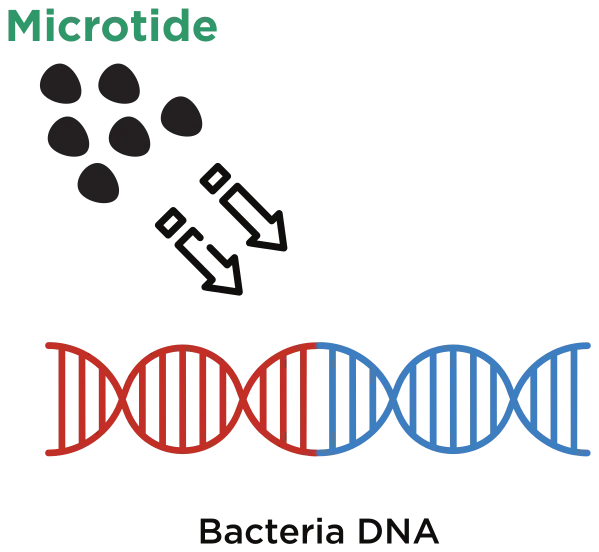
Microtide attacks the DNA directly
Microtide, a new solution for pathogen control
Inhibition zones on agar plates, each well treated with Microtide at 0.05% concentration against the strain listed.
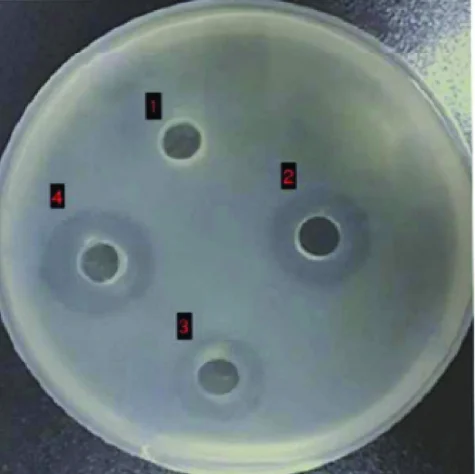
E. coli strains
- Well 1: Control – blank
- Well 2: E. coli ATCC25922 – Microtide treated, 0.05% conc.
- Well 3: E. coli CVCC1515 – Microtide treated, 0.05% conc.
- Well 4: E. coli CVCC1522 – Microtide treated, 0.05% conc.
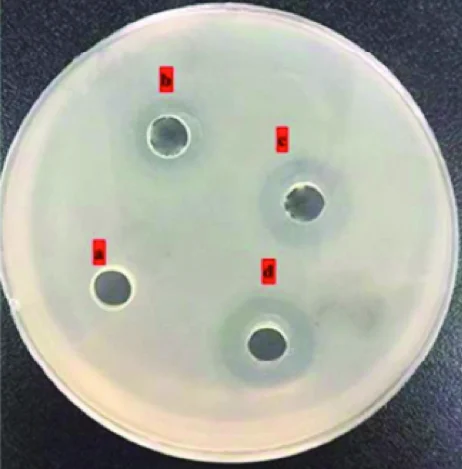
Salmonella and Shigella strains
- Well a: Control – blank
- Well b: Salmonella enterica CDC 6516-60 – Microtide treated, 0.05% conc.
- Well c: Salmonella enterica LRA 03 05 73 – Microtide treated, 0.05% conc.
- Well d: Shigella flexneri CMCC51571 – Microtide treated, 0.05% conc.
Usage and administration
Indicative dosage and application.
| Stage | Prevention | Treatment |
|---|---|---|
| Broiler | ||
| Broiler starter | 200g per tonne feed | 250g per tonne feed |
| Broiler grower/finisher | 150g per tonne feed | 250g per tonne feed |
| Pullet – layer/breeder | ||
| Pullet (1–14 weeks) | 100g per tonne feed | 200g per tonne feed |
| Pullet (14–18 weeks) | 100g per tonne feed | 200g per tonne feed |
| Pullet (> 18 weeks) | 100g per tonne feed | 200g per tonne feed |
| Nursery pigs | ||
| Week (1–14 weeks) | 300g per tonne feed | 500g per tonne feed |
| > 4 weeks | 300g per tonne feed | 500g per tonne feed |
| Grower pigs | ||
| < 6 weeks after weaning | 100g per tonne feed | 300g per tonne feed |
| > 6 weeks after weaning | 100g per tonne feed | 300g per tonne feed |
| Sow | ||
| Sow | 200g per tonne feed | 400g per tonne feed |
Field trial results
The field trial conducted on Microtide was carried out in Myanmar by the University of Veterinary Science, Yezin between September–October 2020. The trial involved 6 closed houses, with 2 houses allocated per group and 10,000 chickens per house. The three groups were: treated with Microtide, treated with neomycin sulphate, and untreated. Promising results were observed in the Microtide-treated group, which showed a reduction of 60% in mortality rates compared to the untreated group and similar results when compared to the group treated with neomycin.
These results demonstrate Microtide’s potential as a beneficial solution for the poultry industry in terms of enhanced health and productivity. Its antimicrobial properties offer a novel approach to combat bacterial infections and improve overall chicken well-being in the poultry sector.
The successful trial in Myanmar, conducted in a large-scale setting with 6 closed houses and three distinct groups, underscores the potential of Microtide as a practical and effective solution for real-world poultry farming.
Mortality (%)
Morbidity (%)
The real future of antimicrobials.
For supply and technical data on Microtide in your market, contact our team. The full brochure (FV9.25) is available to download.